Debunking Oral Fluid Drug Testing Misconceptions
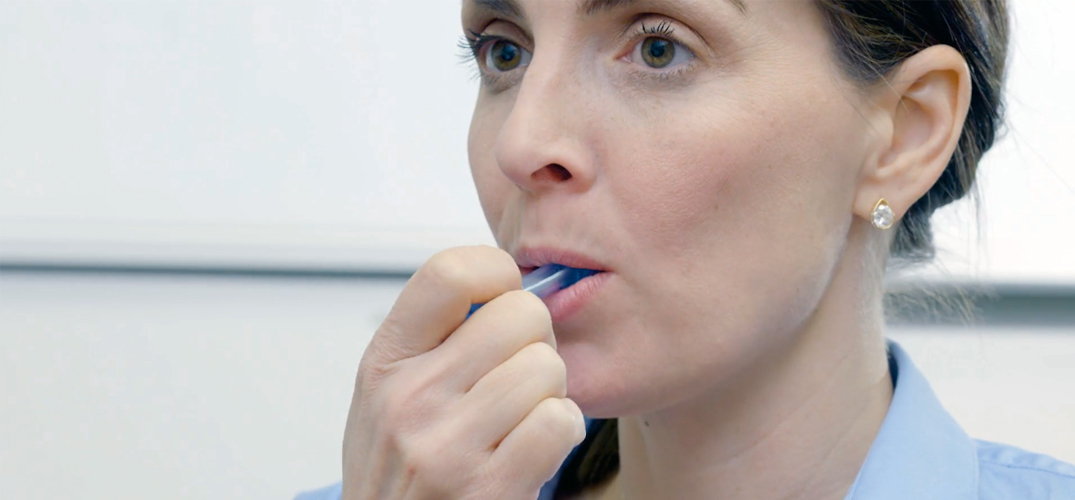
What factors should be considered when evaluating the use of rapid and lab-based oral fluid drug testing in the current climate?
The adoption rate of rapid and lab-based oral fluid drug testing is growing immensely as programs seek a more flexible and safe solution to continue drug testing during the COVID-19 pandemic. While both methods offer a convenient, donor-driven collection procedure that can be supervised by a trained collector from a safe distance, there are many key differences and considerations to take into account.
Additionally, there are common misconceptions people have when it comes to the use of oral fluid drug testing. The fact is, not all oral fluid tests are created equally. Understanding both the benefits and drawbacks of each can help determine the best solution for your specific program’s drug testing needs.
When evaluating the use of rapid and lab-based oral fluid testing, there are many factors to consider including the speed of a test result, window of detection, cutoff levels, convenience, marijuana sensitivity, and cost. Both rapid and lab-based oral fluid testing offer a safe and effective donor-driven collection procedure that allows adherence to physical distancing guidelines.
How effective is oral fluid testing for the detection of Marijuana (THC)?
Before diving into the effectiveness of marijuana testing using oral fluid, it is first important to understand the difference between fat soluble and water soluble drugs. The majority of drugs are water soluble in that they are processed and removed from the body with water. Drugs that dissolve in water (water-soluble drugs) tend to stay within the blood and the fluid that surrounds cells. Water soluble drugs include Benzodiazepines (Xanax, Ativan, Valium, Klonopin), Cocaine, Heroin, LSD, PCP, Ketamine, etc.
THC on the other hand (and its metabolites) are fat-soluble, meaning it is stored in the fat tissue then slowly released from the body’s excretory systems, i.e. sweat, urination, etc. Most fat-soluble toxins are excreted from the body this way. In general, fat-soluble drugs can cross cell membranes more quickly than water-soluble drugs can and tend to remain detectable longer in a person’s system.
The primary way THC enters oral fluids is through the oral cavity. When a person smokes or consumes food mixed with marijuana, it attaches to the oral mucous membrane lining inside of the mouth and is released into the saliva for up to approx. 24 hours.
Urine testing on the other hand has a greater window of detection for Marijuana. THC is metabolized into various inactive metabolites before being excreted in urine, and it is these inactive metabolites that are detected rather than THC itself. For some programs, the shorter window of detection for THC may seem like an obvious drawback to using oral fluid. For others, the ability to detect recent use of marijuana with oral fluid testing is suitable for their specific drug testing needs.
For example, a number of criminal justice (probation and parole) and workplace programs have made the decision to remove THC from their testing panels altogether and are replacing it with drugs that are contributing to increased theft and safety concerns including oxycodone, fentanyl, etc.
How does oral fluid detection times compare to urine testing?
The length of time in which a drug test can detect the presence of a substance in a person’s system can vary substantially based on a number of factors. These factors include the type of screening method, cut-off levels and a number of other factors. Detection times can also vary from person to person. For instance, obese people may store larger amounts of fat-soluble drugs compared to people who are more thin. Age also plays a role as older people may store large amounts of fat-soluble drugs because the proportion of body fat increases with age.
So where does oral fluid stack up? The answer is, it depends. Drug testing using oral fluid tends to detect drugs sooner than urine testing while also having a shorter overall detection window. What is important to remember is that not all drugs detected by an oral fluid test have the same window of detection. For example, while the detection time for THC may be limited (8-24 hours), most drugs remain detectable for much longer (days).
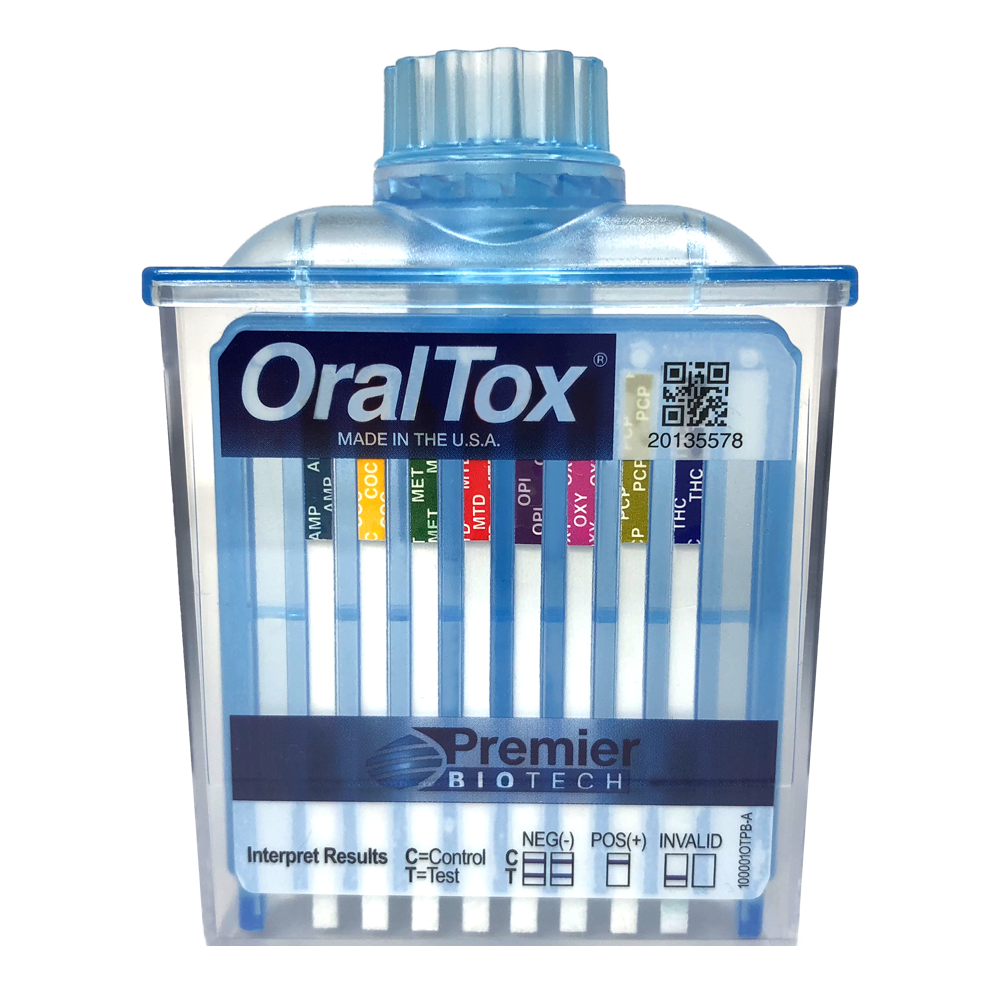
Why OralTox Rapid Oral Fluid
• Avoid collection site drop-off risks resulting in lost time/revenue
• 100% observed procedure that can be done anytime and anywhere
• Gender neutral collection without the need for private restroom
• Proven accuracy and sensitivity backed by laboratory (LC-MS/MS) results
• Patented design with one drug per strip
• Built-in saturation indicator changes color when a sufficient sample has been collected
• Rapid screens use the same immunoassay technology as lab screens
• Significant cost savings and increase in billable hours
• Only inconclusive (non-negative) results are sent to a lab for further testing
• Eliminates the risk of adulteration by substitution, dilution, or additives
• Compatible with OT-Scan – Premier Biotech’s automated results reporting mobile reader app
Intercept i2he – Lab-Based Oral Fluid
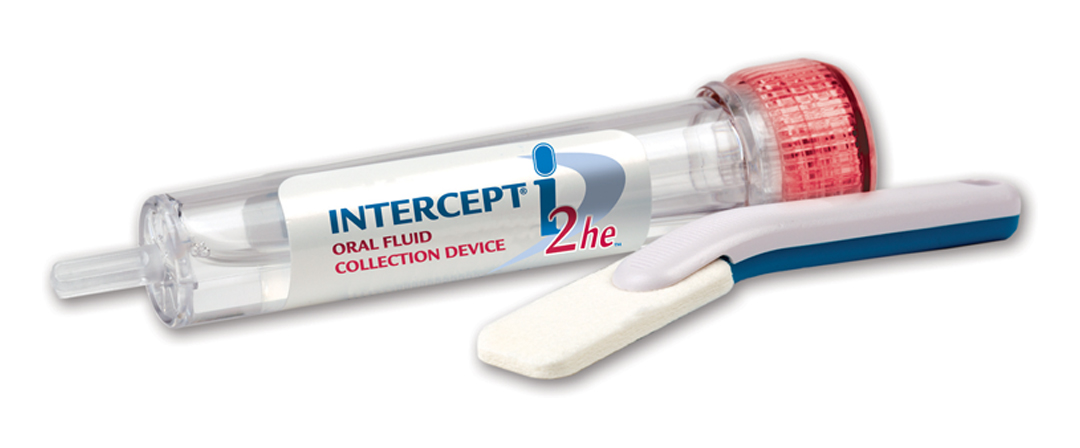
The Intercept® i2he™ Oral Fluid Collection Device is a collection system utilized for lab-based detection of drugs of abuse. Oral fluid is collected under direct observation with the collection taking just minutes. Collection pads are then put into a vial, sealed, and sent to the lab with a completed chain-of-custody form for analysis.
By leveraging the Intercept® i2he™, collectors can conduct the test virtually anywhere while maintaining physical distancing guidelines. A built in volume adequacy indicator removes the guesswork out of the collection. A fast and simple lab-based oral fluid collection device that can be combined with Premier Biotech’s Telehealth and Telecollections virtual collection services.
Why Intercept i2he?
• 100% observed procedure that can be done anytime and anywhere
• Gender neutral collection without the need for private restroom
• Proven accuracy and sensitivity backed by laboratory (LC-MS/MS) results
• Volume adequacy indicator changes color when a sufficient sample has been collected
• Can be used with Premier Biotech’s Telehealth/Telecollection virtual screening services
• Extensive laboratory testing menu (over 35 drugs)
• Laboratory results within 24-72 hours
• Eliminates the risk of adulteration by substitution, dilution, or additives